
ISO 45001: Do Employees and Subcontractors Understand Safety Risks and Controls?
Having a risk assessment on file is useful, but can the people doing the work explain the risks they face and the controls they need to follow?
For SMEs and contractors, this is an important question when reviewing an ISO 45001 health and safety management system. Written procedures need to translate into clear instructions, understanding and consistent working practices.
Below, I answer common questions about making risk awareness work in your business.
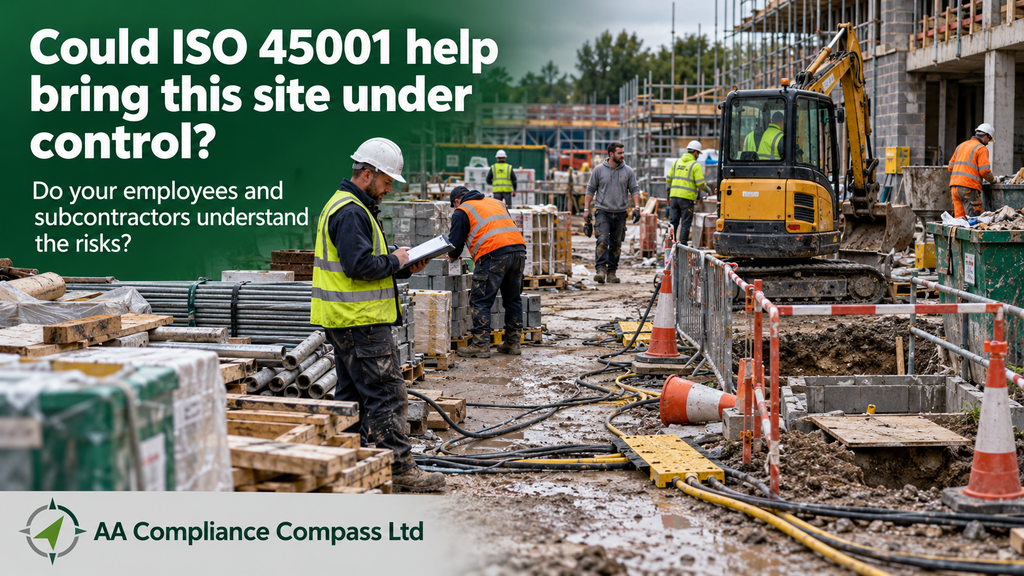
Q: What does understanding risks and controls actually mean?
A: Employees and subcontractors should understand what could cause harm, how it relates to their work and what they need to do to protect themselves and others.
For example, someone handling chemicals should know the relevant hazards, how to use and store the substances safely under Control of Substances Hazardous to Health Regulations 2002, and what to do if there is a spill.
Understanding goes beyond signing a document. People need to be able to apply the controls when carrying out the task.
Q: Is a signed risk assessment enough?
A: A signature can provide evidence that information has been shared. On its own, it gives limited assurance that the person understands it.
Ask practical questions:
- What are the main hazards in this task?
- Which controls must be in place before you start?
- What would make you stop work?
- Who would you tell if conditions changed?
Their answers can help identify where further explanation, training or supervision is needed and if they understand responsibility under Management of Health and Safety at Work Regulations 1999.
Q: How can we help employees understand the controls?
A: Make information relevant to the work they actually do.
Use task briefings, demonstrations, toolbox talks and clear instructions. Explain why each control matters and give people an opportunity to ask questions.
Consider language, literacy and experience. A long procedure may be less effective than a clear demonstration followed by a check that the person can carry out the task safely.
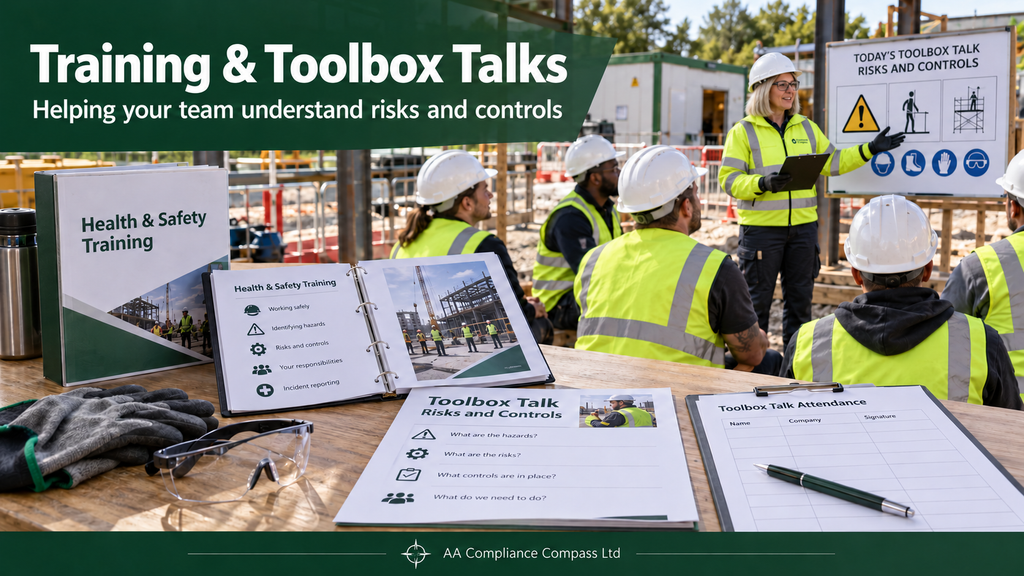
Q: What about subcontractors?
A: Subcontractors bring their own skills and working methods, but they also need to understand the arrangements relevant to your workplace and the work they have been appointed to do.
Check competence, share relevant site information and agree responsibilities before work starts. Where activities overlap, coordinate the controls between everyone involved.
For example, maintenance work may affect employees using nearby equipment. Both groups need to understand how the area will be controlled and when normal operations can resume.
Q: What happens when the job changes?
A: Review whether the existing controls still suit the work.
A change in equipment, materials, location or working conditions may introduce different risks. Brief the people affected before they continue, and update instructions where necessary.
A useful question is: “What has changed since we assessed this task?”
Q: How can an ISO 45001 internal audit check understanding?
A: An internal audit can bring together documents, conversations and observations.
An auditor might review the risk assessment, speak to the people doing the task and observe whether the controls are being followed. If those three sources tell different stories, that is a useful starting point for investigation and improvement.
The aim is to understand why a gap exists and what will resolve it.
Q: Why work with AA Compliance Compass?
A: When you work with me, you get a qualified lead auditor and an experienced commercial and operations director who has built ISO management systems and incorporated them into the way a business runs, undertaken on site internal audits.
I understand the pressures of managing staff, subcontractors, suppliers, customer expectations and daily operations. My approach is to build requirements into those activities so your system supports the business.
That could mean simplifying instructions, clarifying responsibilities or helping managers turn audit findings into practical improvements.
Your ISO system should show it’s value in your business every day and not just be an expensive certificate on the wall to tick a box.

Q: Where should we start?
A: Choose one activity with significant risks. Review the assessment, speak to the people involved and check what happens in practice.
If you need help reviewing your wider system, AA Compliance Compass Ltd provides ISO 45001 gap analysis and internal audit support for SMEs and contractors, based near Matlock in Derbyshire.
Explore my ISO consultancy and compliance support services or email Anne.ashman@compliance-compass.co.uk to discuss your requirements.
If this sounds familiar, call me on 07889 890234. I can complete a practical gap analysis and give you a prioritised action plan.