
Expert Guide to Start Up Loans for UK Small Businesses
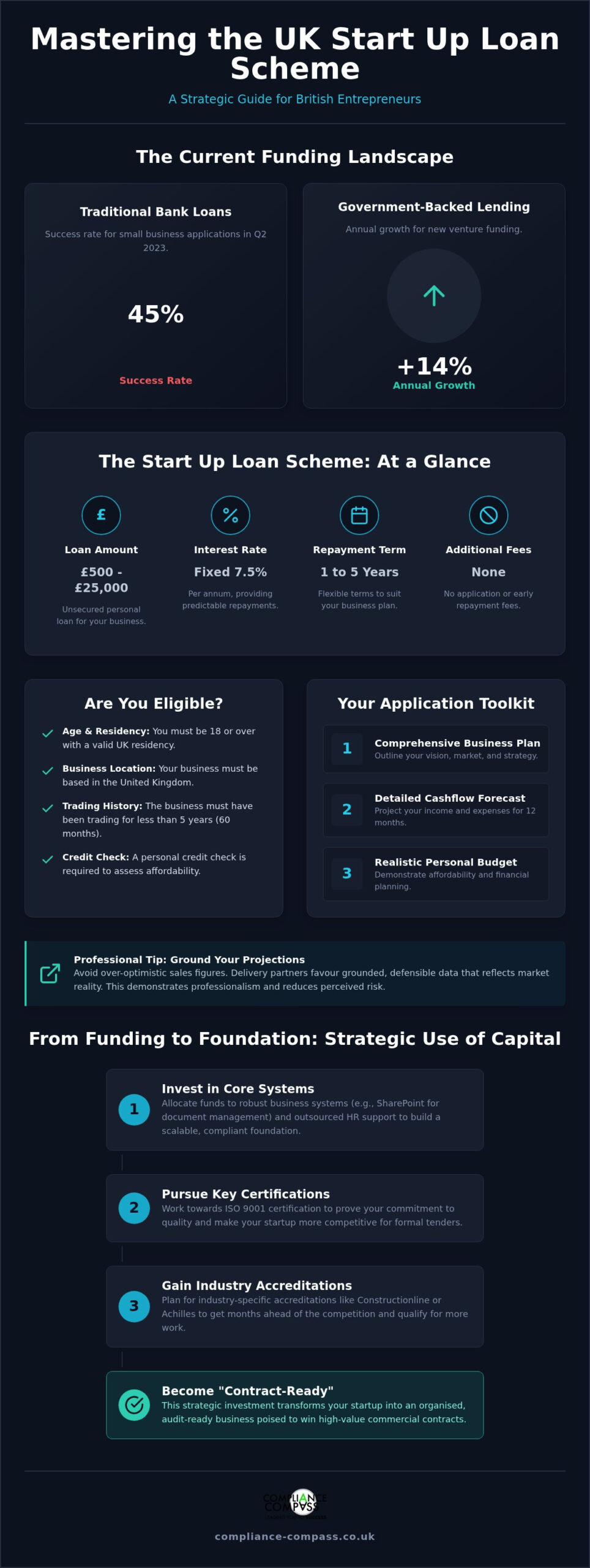
Did you know that the success rate for traditional bank loans for small businesses fell to just 45% in Q2 2023, while government-backed lending for new ventures grew by over 14% this past year? It’s completely natural to feel overwhelmed by financial jargon or worried that a single mistake in your application for Start Up Loans might lead to rejection. You’re likely looking for a way to cut through the confusion between grants and loans to find a stable path forward.
This guide is designed to help you master the application process whilst ensuring your business is compliant and ready for long-term success. We’ll explore the specific eligibility requirements, explain how to build a professional financial roadmap, and show you how to structure your business correctly from day one.
Key Takeaways
- Identify your eligibility for government-backed Start Up Loans, which offer between £500 and £25,000 at a fixed 7.5% interest rate to help launch or grow your business.
- Prepare the three essential application documents, including your business plan, cashflow forecast, and personal budget, to present a professional case to delivery partners.
- Adopt a “contract-ready” structure early by investing in robust business systems that help you organise documentation and ensure compliance as you scale.
- Use your initial capital strategically to work towards ISO 9001 certification, making your startup more competitive for lucrative commercial tenders.
Understanding the UK Start Up Loan Scheme: Eligibility and Requirements
The UK Start Up Loans Scheme is a government-backed initiative delivered through the British Business Bank. Unlike traditional corporate finance, these are unsecured personal loans specifically intended for business purposes. This distinction is vital; you are personally responsible for the debt even if your business is a limited company. Currently, the scheme offers a fixed interest rate of 7.5% per annum with repayment terms ranging from one to five years. It’s a structured, predictable way to secure capital between £500 and £25,000 without the sting of application fees or early repayment penalties.
Eligibility isn’t just about having a brand-new idea. Your business must be based in the UK and have been fully trading for less than five years (60 months). This extended window is a significant advantage, as many owners wrongly assume they are ineligible once they pass their first or second year of operation.
Key Criteria for British Entrepreneurs
To apply, you must be aged 18 or over and hold a valid UK residency. Because Start Up Loans are unsecured, you don’t need to put up assets like your home as collateral. However, a personal credit check is a standard part of the assessment process to ensure the loan is affordable for your specific circumstances.
While the loan is personal, the funds must strictly support your business operations. Whether you’re investing in business systems to manage growth or hiring your first employee, the capital provides the momentum needed for early-stage stability whilst building a professional foundation. This scheme bridges the gap for those who may struggle to secure funding from high-street banks, where success rates for small business applications fell to 45% in 2023.
Preparing a Successful Application: Documenting Your Business Case
Securing Start Up Loans requires more than just a good idea; it demands a robust, evidence-based business case. Delivery partners assess your application based on three essential pillars: a comprehensive business plan, a detailed cashflow forecast, and a realistic personal budget. This documentation proves you’ve considered the risks and have a clear path to repayment. Before you begin, checking your Start Up Loan Eligibility ensures you meet the foundational requirements set by the British Business Bank.
Adopting a “contract-ready” mindset at this early stage is vital. It signals to lenders that you’re organised, professional, and ready for growth. Avoid the temptation to present over-optimistic sales figures that look good on paper but lack substance. Delivery partners often flag inflated projections as a sign of high risk. Instead, provide grounded, defensible data that shows you understand your market’s reality and the practical challenges of your first year of trading. For broader funding options beyond Start Up Loans, exploring expert grant and funding support for UK businesses can help you identify additional capital sources that align with your growth plans.
The Role of Professional Cashflow Forecasting
Accuracy is the cornerstone of a successful application. Utilising professional bookkeeping support ensures your 12-month forecast is technically sound and accounts for seasonality, lead times, and VAT obligations. A common mistake is grouping all expenses together; instead, categorise your initial start-up costs separately from ongoing operational expenses. This distinction demonstrates high financial literacy whilst helping you track exactly where the loan capital is being deployed. This level of detail is exactly what assessors look for when reviewing Start Up Loans applications. If you’re feeling overwhelmed by the paperwork, our team can help you prepare your financial roadmap to ensure every figure stands up to scrutiny and reflects a professional business structure from day one.
Maximising Your Funding: Integrating Compliance for Long-Term Growth
Once you’ve successfully secured your Start Up Loans, the focus shifts from acquisition to strategic allocation. While it’s tempting to spend entirely on marketing or stock, investing in the infrastructure of your business provides far greater long-term stability. Allocating a portion of your funding towards robust business systems reduces operational risk. It ensures you aren’t overwhelmed by administrative debt or disorganised records as you scale.
For many startups, the ultimate goal is to win high-value commercial contracts. Achieving ISO 9001 support early makes you immediately more competitive for formal tenders, as it proves your commitment to quality. Similarly, integrating outsourced HR support prevents costly legal mistakes during your first hires, protecting your capital from avoidable tribunal risks. If you’re still in the planning phase, reviewing the official guidance on how to apply for Start Up Loans will help you factor these essential compliance costs into your initial budget.
Building a Contract-Ready Foundation
Many industries require specific accreditations to even bid for work. Planning for Constructionline support or Achilles accreditation as soon as funding is secured puts you months ahead of the competition. Centralised document management, typically using SharePoint, ensures your business remains audit-ready from day one whilst removing the stress of manual filing. At AA Compliance Compass Ltd, we act as your “expert-next-door,” simplifying these complex regulatory requirements so you can focus on core operations. We provide a safe pair of hands, helping you move quickly from a new venture to a professional, contract-ready enterprise with a clear financial roadmap.
Building Your Funded Future
Securing Start Up Loans marks the beginning of your journey from a vision to a viable enterprise. By mastering the application process and presenting accurate financial documentation, you transition from a dreamer to a professional business owner. Success isn’t just about receiving capital; it’s about how you allocate those funds to build a compliant, scalable structure. Implementing robust business systems and seeking professional advice on bookkeeping or ISO standards early on saves money and reduces stress. With over 15 years of industry experience, we act as a safe pair of hands to guide you through these complex requirements whilst ensuring you remain audit-ready. You’re now equipped to navigate the British Business Bank’s requirements with confidence and clarity.
Contact our team for expert help with your Start Up Loan application and documentation
You have the drive to succeed; let’s ensure your business has the professional foundation to match your ambition.
Frequently Asked Questions
Can I get a Start Up Loan if I have a poor credit history?
You can still apply, as the assessment considers your current affordability alongside your credit history. While a personal credit check is mandatory for all Start Up Loans, a low score isn’t an automatic rejection. Lenders look for evidence that you can manage the repayments and have a viable business case. We recommend addressing any past issues transparently in your application documentation.
Is a Start Up Loan a grant that I do not have to pay back?
No, this is a government-backed personal loan, not a grant. You are required to repay the full amount, plus a fixed interest rate of 7.5% per annum, over a term of one to five years. Unlike grants, which are often restricted to specific projects, these Start Up Loans provide flexible capital for your business whilst requiring a commitment to a structured repayment schedule.
Do I need a professional accountant to apply for a Start Up Loan?
You don’t strictly need a qualified accountant to submit your application. However, presenting professional documentation is essential for success. Many founders find that using expert support for bookkeeping and cashflow forecasting reduces the risk of errors. Having a safe pair of hands to verify your figures ensures your application looks professional and demonstrates high financial literacy to the delivery partners.
What happens if my business plan is rejected during the application?
Rejection isn’t necessarily the end of the road for your funding goals. If your plan is turned down, the delivery partner will provide specific feedback regarding the areas that need improvement. You can then refine your business case, address the concerns raised, and reapply. This process is often a valuable exercise in strengthening your operational structure for long-term growth.
Disclaimer
This article is for general information only and does not constitute legal, financial or professional advice. Requirements may vary, so please seek advice appropriate to your circumstances. AA Compliance Compass Ltd accepts no liability for actions taken based on this content.